The 5 Stages of a Thriving Community
Understanding Why Some Communities Become Great Places to Call Home
When people buy a home, they're not just buying four walls and a roof—they're investing in the future of an entire community. One of the questions I often hear is:
"How do you know if an area is going to continue growing?"
While every city develops differently, and takes years even decades to develop, understanding the stages of community growth will help buyers make more informed decisions and recognize opportunities before everyone else does.
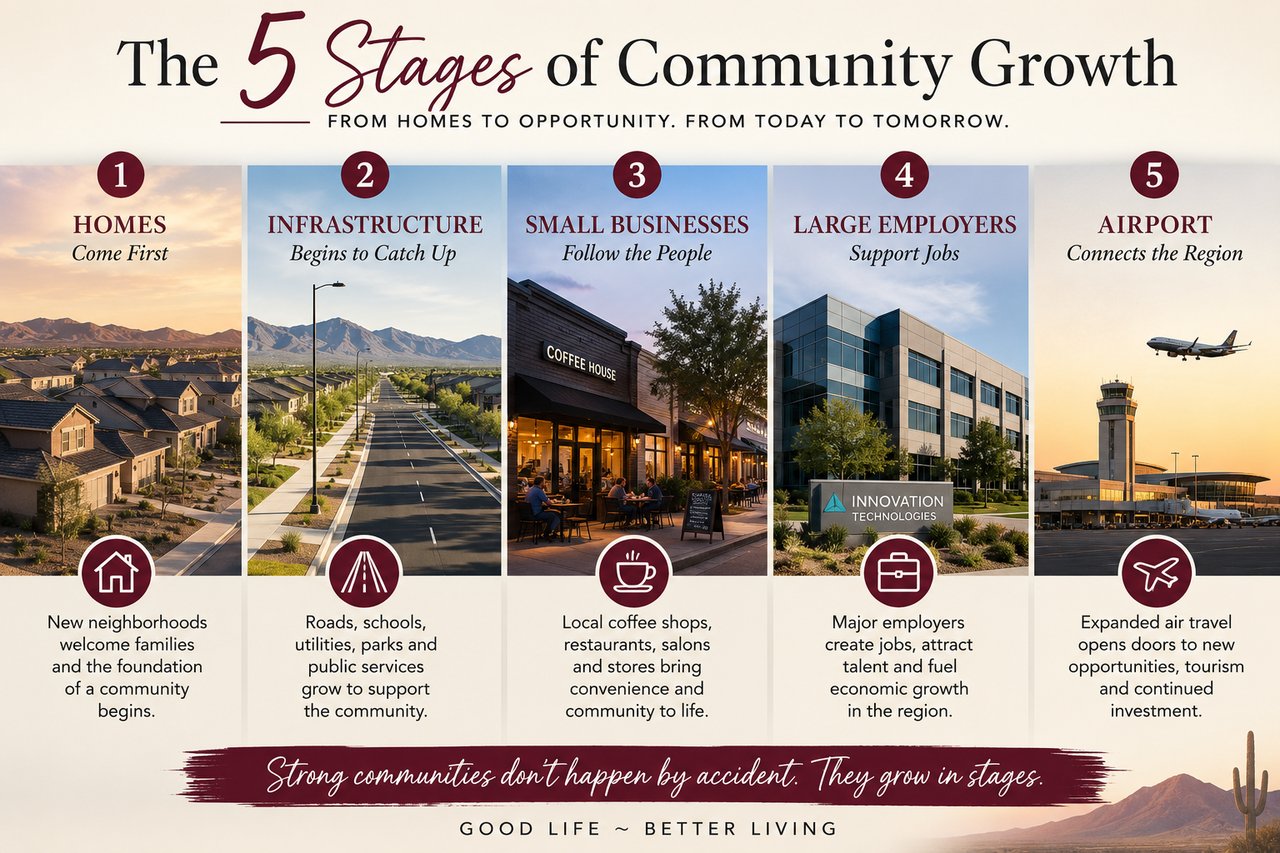
Stage 1: The Homes Come First
Every thriving community begins with rooftops. Builders purchase land, create neighborhoods, and families begin moving in. At this stage, the area may feel quiet, with plenty of open land and construction taking place nearby.
Some buyers hesitate because they don't see many conveniences yet. Ironically, these early buyers are often the ones who benefit the most as the community matures. Buying during this stage often means having more home choices, newer construction, and the opportunity to watch the neighborhood grow around you.
Stage 2: Infrastructure Is Next
As more families move in, local governments invest in infrastructure.
You begin to see:
- New roads and intersections
- Traffic signals
- Parks and recreation areas
- Schools
- Utilities
- Walking and biking paths
These improvements aren't just conveniences—they're signs that the city is planning for long-term growth. Infrastructure creates confidence for future investment.
Stage 3: Next to follow is Small Businesses - Small Businesses Follow the People
Once enough residents are established, local businesses begin opening their doors.
Think about the places people enjoy every week:
☕ Coffee shops
🥯 Breakfast cafés
🍕 Family-owned restaurants
💇 Hair salons
🏋️ Fitness studios
🛒 Neighborhood grocery stores
These businesses don't arrive by accident. They open because there are enough people nearby to support them. This is often the point when a neighborhood begins to develop its own personality. Residents no longer have to drive across town for everyday conveniences.
Community begins to feel... well, like a community.
Stage 4: Major Employers Arrive
It's worth noting, that all the stages takes years even decades before advancing to the next state. Nevertheless, nce a community has established neighborhoods, infrastructure, and supporting businesses, larger employers begin to take notice.
This often include:
Entertainment venues
- Corporate offices
- Manufacturing facilities
- Medical campuses
- Distribution centers
- Technology companies
- Educational institutions
Large employers create jobs. Jobs bring more residents. More residents support additional businesses. It's a cycle that fuels long-term economic growth and often contributes to increased housing demand.
Stage 5: Transportation Expands the Region
One of the final signs of a mature, thriving community is expanded transportation.
That may include:
- Highway improvements
- Public transportation
- Regional transit connections
- Airport expansions—or even entirely new airports
Transportation doesn't just make travel easier. It connects communities to new jobs, tourism, commerce, and investment. As accessibility improves, so does the appeal of the area to businesses and future homeowners.
Why This Matters to Homebuyers
Many people look at where a community is today. I encourage my clients to also consider where it's going tomorrow. When you understand the stages of growth, you begin to see opportunities that others may overlook.
Perhaps the coffee shop hasn't opened yet—but the land has already been purchased. Maybe the employer hasn't broken ground—but the infrastructure is already being built to support it.
Growth leaves clues. Learning to recognize those clues can help buyers make decisions that benefit them for years to come.
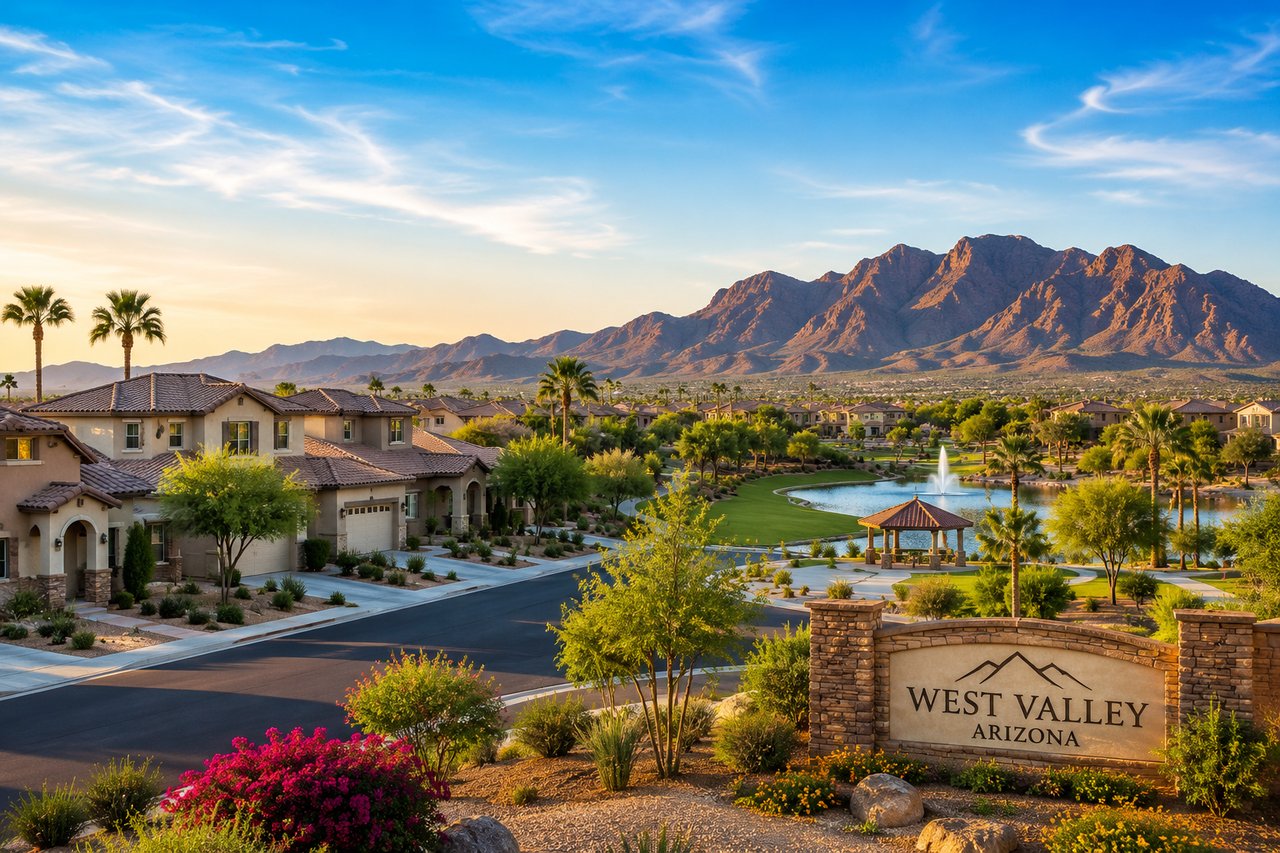
Looking at the West Valley
Here in Arizona's West Valley, we've seen this pattern unfold. Big corporate employers have laid their stake in the ground closest to the main freeway arteries.
Communities like Goodyear, Buckeye, Surprise, Litchfield Park, and areas surrounding Estrella and Verrado continue to evolve as new neighborhoods, businesses, employers, and transportation projects shape the future of our region.
Each new investment builds upon the last, creating communities where people don't simply own homes—they build lives.
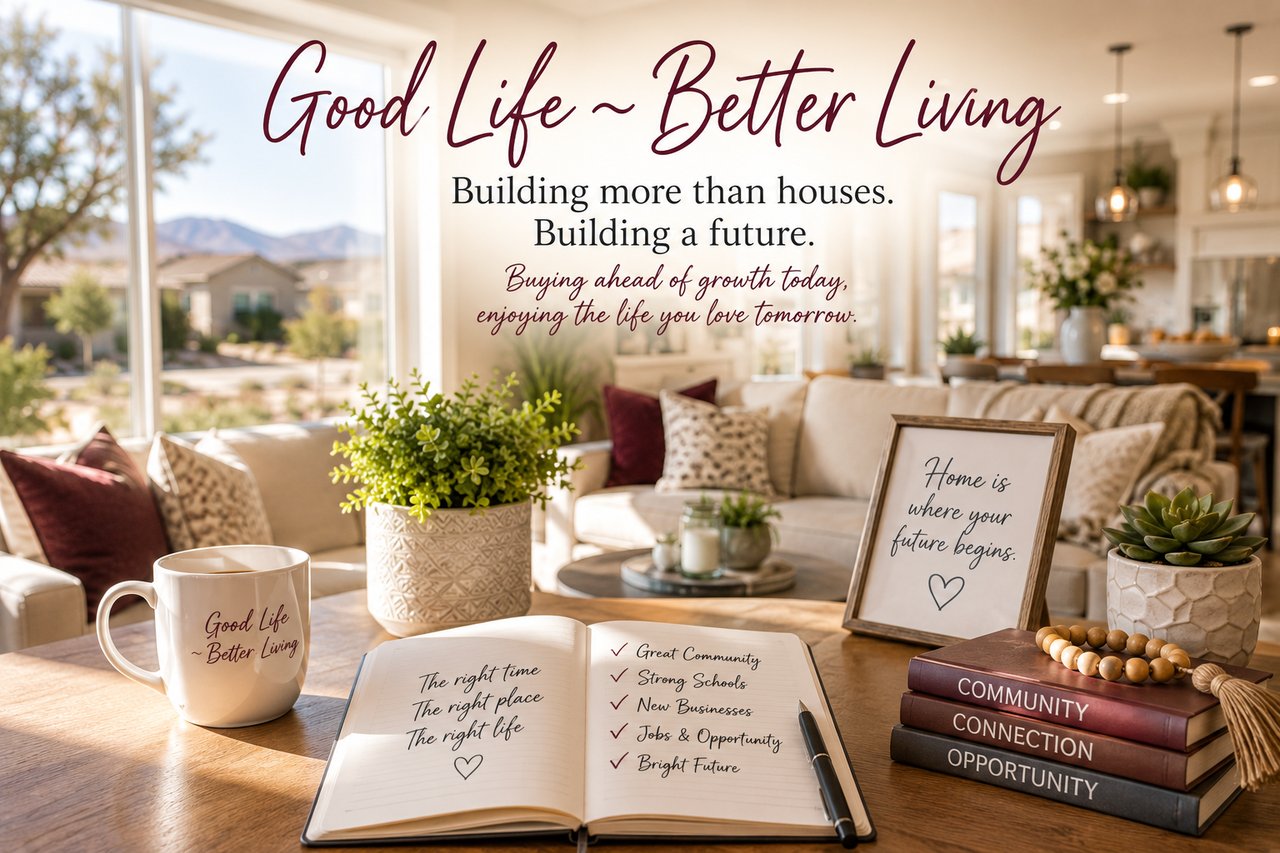
Good Life ~ Better Living
One of my favorite parts of being a REALTOR® isn't simply helping people buy or sell a home. It's helping them understand the community they're investing in.
Because a great home is important...
But a great community is what truly makes it feel like home.